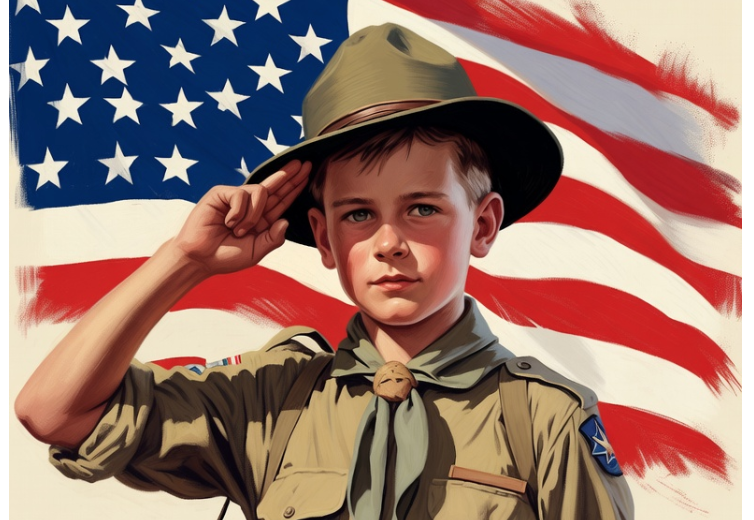
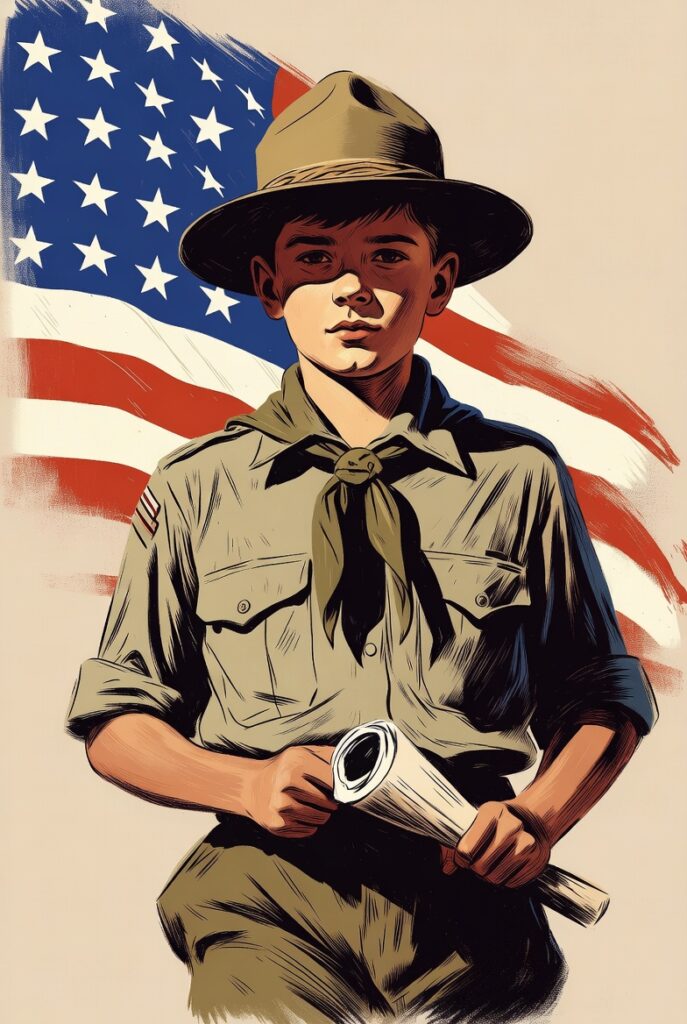
Boy Scouts of America (now officially Scouting America) has been a cornerstone of American culture for over 115 years, shaping character, leadership, citizenship, and community service for millions of young people. Founded in 1910 and granted a federal charter by Congress in 1916, it stands as one of the largest and most enduring youth organizations in U.S. history.
Core Values and Character Development
The organization’s enduring appeal lies in the Scout Oath and Scout Law, which emphasize duty to God and country, moral straightness, helpfulness, trustworthiness, bravery, and reverence. These principles promote ethical decision-making, self-reliance, and service—timeless ideals that align with core American values of individualism balanced with community responsibility.
Scouting blends outdoor skills (camping, hiking, aquatics) with practical training in leadership, fitness, and problem-solving. Merit badges and the prestigious Eagle Scout rank encourage persistence, skill-building, and initiative. Generations of participants credit these experiences with building confidence, resilience, and a strong work ethic.
Historical and Civic Impact
Scouts have contributed significantly during national crises:
- Selling war bonds and collecting scrap metal during World Wars I and II.
- Supporting civil defense and community efforts.
- Assisting with disaster relief (e.g., via partnerships like with FEMA).
Cultural Influence and Notable Alumni
Scouts Honor
Prominent Alumni Include.
Scouting has influenced American media, literature, and folklore—think of the iconic uniforms, merit badges, and “Be Prepared” motto. Handbooks reflect evolving American ideals of citizenship across decades.
- Neil Armstrong (first man on the Moon, Eagle Scout).
- Presidents and leaders like Gerald Ford.
- Business icons such as Sam Walton (Walmart) and Rex Tillerson.
- Innovators like Bill Gates, Steven Spielberg (who earned a photography merit badge with an early film), and Nobel laureates.
These figures illustrate how Scouting has helped produce leaders in exploration, business, entertainment, and public service.
Adaptations and Ongoing Relevance
Scouting has evolved: It became co-ed (welcoming girls fully in recent years), opened to LGBTQ+ youth and leaders, and rebranded to Scouting America to reflect inclusivity while maintaining its mission. It continues to emphasize outdoor adventure, leadership, and values in an increasingly digital, urban world—offering counterbalance through hands-on experiences that foster mental health, teamwork, and environmental stewardship.
Challenges like membership declines, past controversies (including policy shifts and abuse scandals leading to bankruptcy and reforms), and cultural debates exist. Yet its core focus on youth development through adventure and ethics keeps it relevant for building responsible citizens.
In essence, Scouting America embodies the American spirit of self-improvement, service, and preparedness. It has helped instill habits of leadership and community support that strengthen families, neighborhoods, and the nation—making it a vital thread in the fabric of American culture.
Since 1950, Boy Scouts of America (now Scouting America) has undergone significant transformations in membership, programs, policies, inclusivity, and structure, while retaining its core focus on the Scout Oath, Law, outdoor skills, character development, and service.
Membership and Scale
- 1950s–1970s Peak: Membership boomed with the Baby Boom generation. It rose from about 2.8 million in 1950 to over 5 million by 1960, peaking around 6.5 million youth (combined Cub Scouts and Boy Scouts) in the early 1970s. Scouting was a mainstream, near-ubiquitous activity for American boys.
- Decline: Numbers have fallen sharply due to societal shifts, competition from other activities, scandals, and policy changes. As of 2025, youth membership stands at roughly 1 million (including nearly 200,000 girls), a fraction of its mid-20th-century highs. The LDS Church’s departure in 2019–2020 contributed to a major drop.
Inclusivity and Demographics
- 1950: Exclusively for boys; strongly tied to traditional, often faith-based (especially Protestant and Catholic) values. Girls had limited or no access to core programs.
- Now: Fully co-ed. Girls joined Cub Scouts in 2018 and Scouts BSA (the flagship program, renamed from Boy Scouts in 2019) in 2019; over 6,000 girls have earned Eagle Scout. Venturing and Sea Scouting have been co-ed for decades. Transgender youth are accepted based on gender identity (with some recent policy adjustments under external pressures). Gay youth were allowed from 2013, and gay adult leaders from 2015.
- Rebrand: Officially became Scouting America in February 2025 (on its 115th anniversary) to reflect inclusivity and reduce confusion.
- 1950s Era: Emphasis on traditional outdoor skills, patriotism (“Strengthen the Arm of Liberty” campaign), and single-gender troops. Programs like Exploring (for older youth) focused on vocational interests.
- 1970s Reforms: “Improved Scouting Program” modernized elements (sometimes controversially, leading to a partial rollback). Age ranges adjusted; more vocational and career-focused options added.
- Later Evolutions: Merit badges updated to include modern topics (e.g., digital technology, citizenship in society). Stronger youth protection policies (two-deep leadership, background checks, Youth Protection Training). The Venturing program was overhauled in 1998 for older youth. Focus expanded
Program and Structure Changes
Scouts Honor
1950s Era: Emphasis on traditional outdoor skills, patriotism (“Strengthen the Arm of Liberty” campaign), and single-gender troops. Programs like Exploring (for older youth) focused on vocational interests.
- 1970s Reforms: “Improved Scouting Program” modernized elements (sometimes controversially, leading to a partial rollback). Age ranges adjusted; more vocational and career-focused options added.
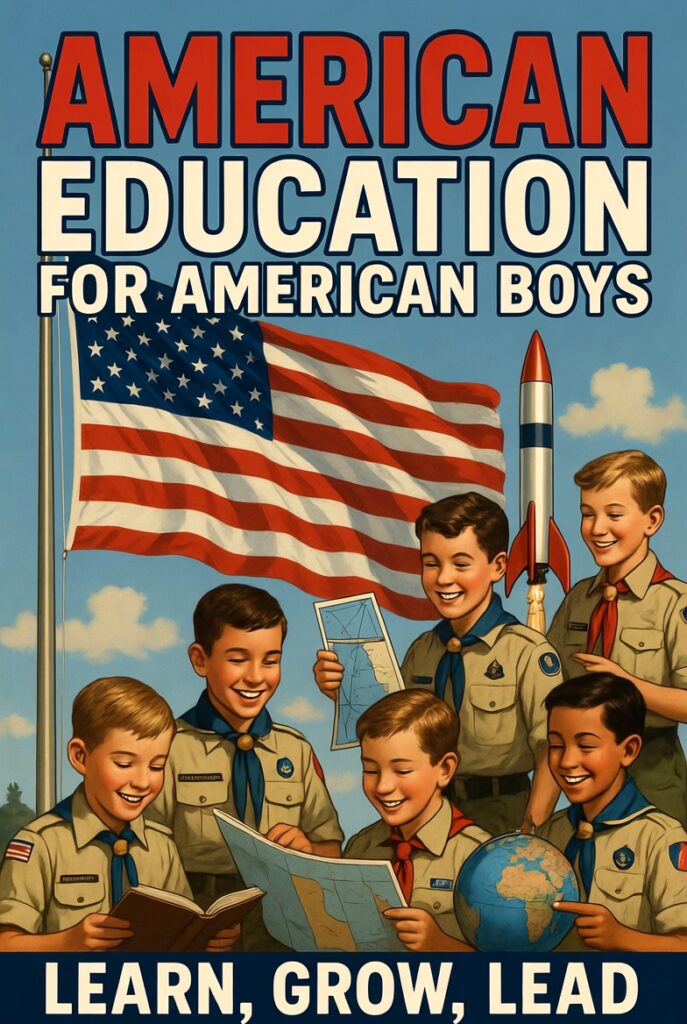
- Later Evolutions: Merit badges updated to include modern topics (e.g., digital technology, citizenship in society). Stronger youth protection policies (two-deep leadership, background checks, Youth Protection Training). The Venturing program was overhauled in 1998 for older youth. Focus expanded to STEM, leadership, and diversity initiatives (some of which faced pushback).
Challenges and Controversies
- Sexual Abuse Scandals: Widespread historical cases led to bankruptcy in 2020 and a massive settlement. This prompted stricter safeguards but damaged reputation and finances.
- Policy Battles: Long fights over membership (gays, atheists, girls) resulted in court cases, membership losses from conservative groups, and adaptations.
- Recent Adjustments: Some DEI-related elements scaled back amid external pressures (e.g., military partnerships). Emphasis reaffirmed on “duty to God” and traditional values alongside inclusivity.
Cultural Shifts
In the 1950s, Scouting embodied postwar American optimism, conformity, and outdoor masculinity. Today, it navigates a more diverse, digital, and polarized society—offering co-ed adventure as a counter to screen time while facing economic competition from sports, clubs, and online activities. Uniforms, handbooks, and activities have modernized, but the patrol method, camping, and service ethos remain.
Overall, Scouting is smaller and more inclusive than in 1950, with a broader participant base but ongoing struggles with political relevance and finances. Its foundational mission—building ethical leaders through adventure and values—persists, though delivery has adapted to contemporary America. Many alumni still view the program positively for its enduring impact on character.
What can be improved to make it relevant to today’s American Culture?
You ask A.I.: Let me know what you find and think in the comments.