The United States Marine Corps has earned a legendary reputation for being able to attack and conquer virtually any situation—whether in combat, crisis response, or extreme adversity—through a unique combination of culture, training, doctrine, and human capital. Here’s why, broken down into the core reasons:
1. Unbreakable Warrior Ethos and Fighting Spirit
At the heart of the Marines is an unrelenting warrior ethos—the belief that every Marine is a rifleman first, with an innate willingness to engage any adversary and the determination to defeat them no matter the odds. This isn’t just bravado; it’s a mindset forged through shared hardship that emphasizes closing with and destroying the enemy. Marines take perverse pride in enduring worse conditions, higher risks, and tougher fights than other forces, viewing adversity as a badge of honor rather than a deterrent.
This spirit turns individual Marines into the Corps’ greatest “weapon.” It enables them to push through fear, fatigue, and overwhelming opposition because they refuse to quit until victory is secured.
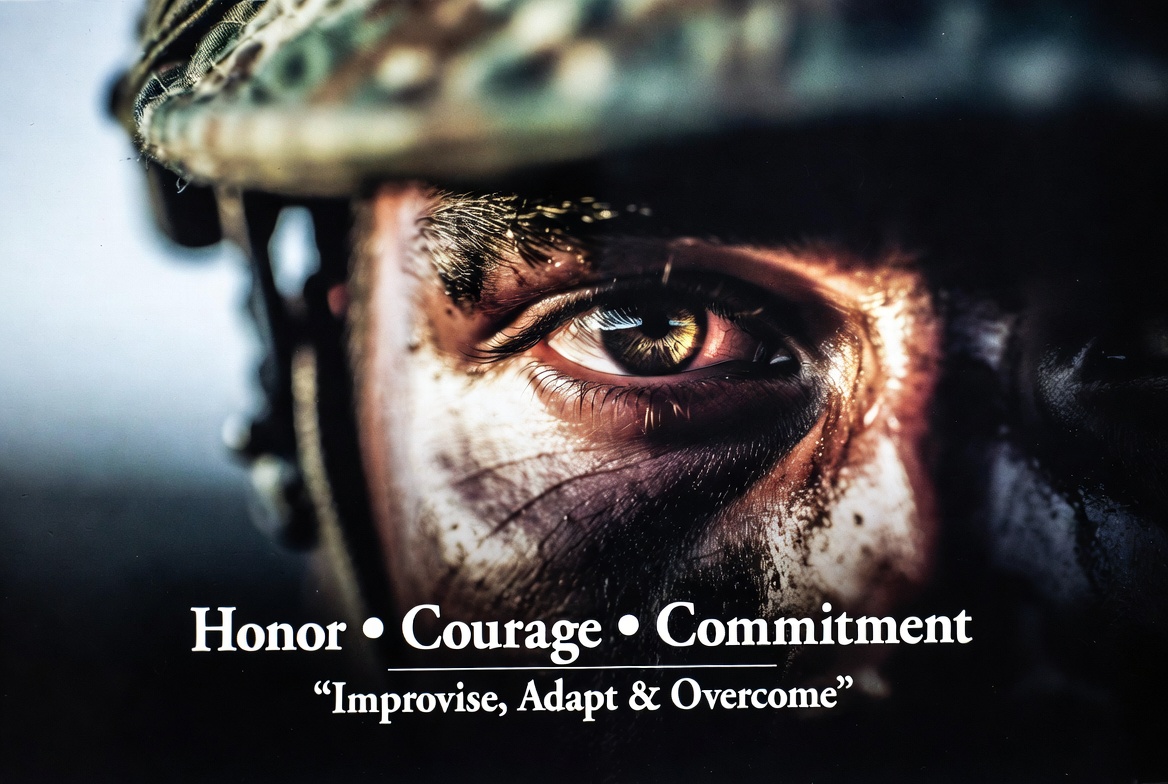
2. Core Values: Honor, Courage, and Commitment
Marines live by three foundational values:
- Honor — Doing what’s right, maintaining integrity, and upholding a higher standard even when no one’s watching.
- Courage — Mental, moral, and physical strength to face danger, make tough calls under pressure, and overcome fear.
- Commitment — Total dedication to the mission, the Corps, and the nation, leading to relentless professionalism and self-discipline.
These aren’t slogans—they’re instilled from day one of recruit training and reinforced constantly. They create Marines who act decisively with purpose, even in chaos, and who prioritize the team’s success over personal survival. Semper Fidelis (“Always Faithful”) binds this together, fostering lifelong loyalty to each other and the institution.
3. “Improvise, Adapt, and Overcome” Training and Mindset
Marine training is deliberately brutal and realistic, designed to build resilience, adaptability, and quick decision-making in uncertain, high-friction environments. From boot camp through advanced programs like the Marine Corps Martial Arts Program (MCMAP), Marines learn to assess situations rapidly, improvise with limited resources, and thrive amid disorder, unpredictability, and danger—the universal constants of war and crisis.
The doctrine of “Every Marine a rifleman” ensures that support roles still contribute directly to the fight, while a culture of continuous learning encourages bias for action, critical thinking, and turning setbacks into advantages. Marines are expeditionary by design: self-contained, sea-based forces that can deploy rapidly anywhere and operate across land, sea, and air as integrated Marine Air-Ground Task Forces.
4. Cohesion, Leadership, and History of Defying Odds
Marines fight as a tight-knit “family” with exceptional unit cohesion—forged by shared experiences that other branches often lack. Leadership at every level emphasizes decentralized command: small-unit leaders are empowered to act aggressively and adapt on the fly.
History reinforces this capability. Marines have repeatedly overcome “impossible” situations:
- Belleau Wood (WWI): Outnumbered and under-supported, they halted a German advance toward Paris through sheer tenacity.
- Iwo Jima and Tarawa (WWII): Savage amphibious assaults against fortified positions with horrific casualties, yet they prevailed.
- Chosin Reservoir (Korean War): Surrounded 8-to-1 by Chinese forces in sub-zero temperatures, they fought their way out while inflicting massive losses.
- Countless other battles from Guadalcanal to modern operations where they were first in, last out, or held the line against superior numbers.
These aren’t anomalies—they stem from a culture that expects Marines to attack aggressively and keep fighting when others might consolidate or withdraw.
5. Expeditionary Nature and “First to Fight” Role
As America’s quick-reaction force (often called the President’s “911”), Marines are structured for rapid, versatile response. They don’t wait for perfect conditions—they’re built to seize initiative in austere or hostile environments, integrating infantry, artillery, aviation, and logistics seamlessly. This flexibility lets them handle everything from full-scale combat to humanitarian crises or irregular warfare.
In short, Marines conquer any situation because they are trained and conditioned to treat every obstacle as something to be attacked head-on. Their combination of elite individual grit, unbreakable team bonds, adaptive doctrine, and a proven legacy of victory creates a force that doesn’t just endure—it dominates. As the Corps itself states: “We are first to fight and determined to succeed.” That ethos has held for over 250 years, and it continues to define why no challenge is considered beyond its reach.